Success in the Martha Mills Young Writers’ Prize
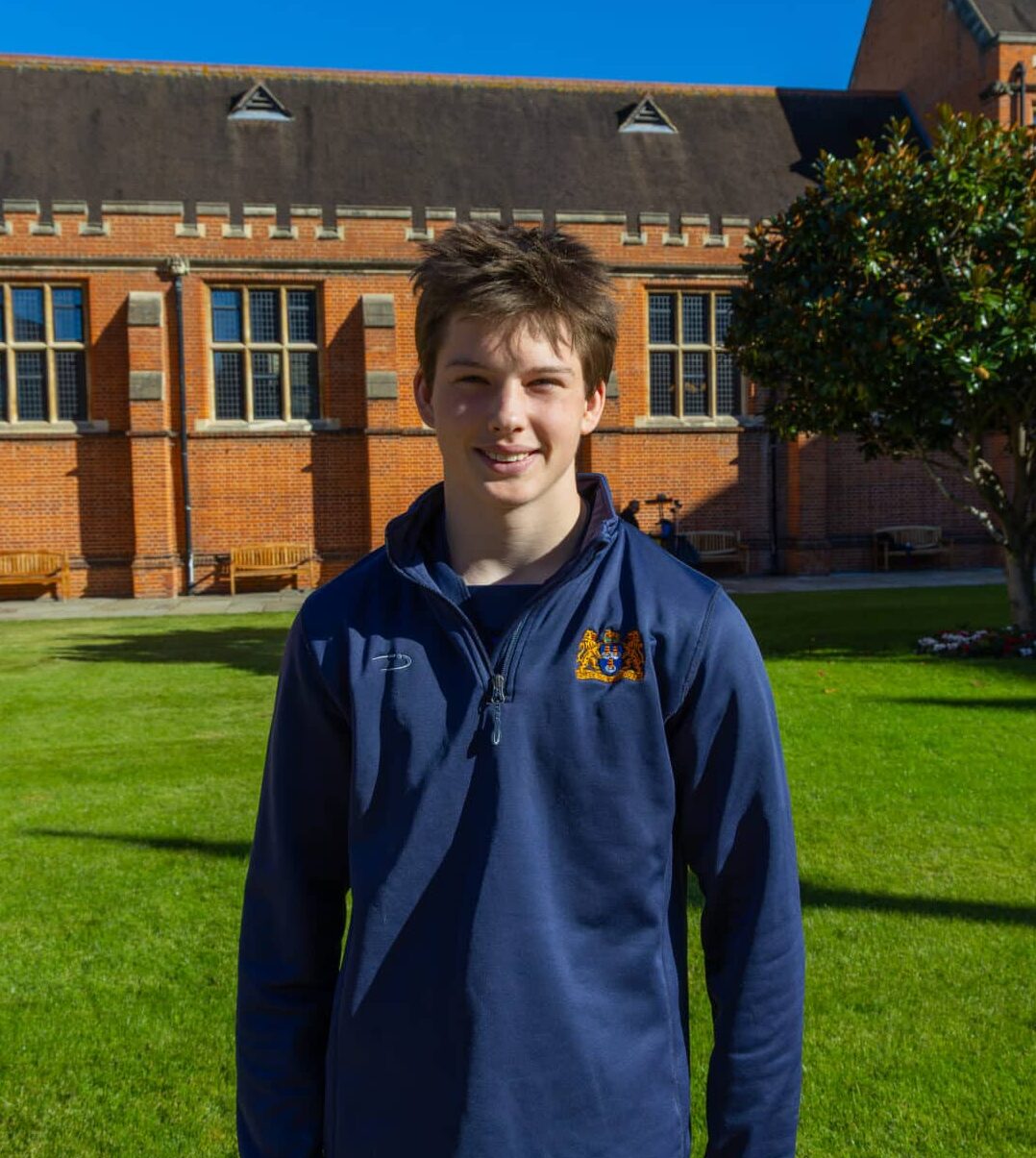
Seb's short story He Walked was recently selected from hundreds of entries as one of 11 runners-up in the Martha Mills Young Writers’ Prize.
The story follows an injured soldier making his way through an unfamiliar country, where an unexpected act of kindness from a stranger offers him some hope.
Selected from hundreds of entries, Seb and his family were invited to a special celebration at the London Review Bookshop. There, he received a booklet featuring his published story, which we’re very pleased to share below.
‘He Walked’
The soldier walked. His first memory in life was walking into his mother’s arms; he had walked through school, average grades for an average man; he had walked his way into the army registration office; he had walked out of basic training and onto that plane; he had walked off the plane onto foreign soil.
And now he was walking to his death.
The pain felt like the patter of rain on a tin roof. The pain smelled like dried blood and leaking pus . . . the pain stung like pain. As the soldier hobbled, he was aware of the desert sun, the rays glistening and refracting. He noticed his leg hurting like you would notice a stain on your shirt, a perfunctory glance, and then back to the task at hand. He continued on.
In his mind, he was not a man indentured by the military, trudging alone and injured; in his mind, he was retired, wandering carefree across a Malaysian beach misremembered from a holiday brochure belonging to brighter times. His delirious state was interrupted by yelling, in a language he did not understand. The soldier ceased his walking, like an automaton being switched off. Slowly, as if with great effort, he lifted his head and squinted to see who it was against the harsh light. It was a man, an enemy – no, a civilian. The soldier surveyed his surroundings; the foreign man’s yelling washed over him like a soft breeze. The soldier at once realised the futility of any survey – he could not remember the country he was in, let alone recognise a landmark. And so he turned to face the man, as the pain in his leg turned from rain to hail.
The man, realising the soldier could not understand him, gestured as if ushering a child indoors from play. The soldier saw no harm in following him; he humoured himself that he was half dead already – for the man to kill him would just be the waste of a good bullet. He was directed into a small shack and saw an assortment of old farming tools and knives and children’s knick-knacks. He was guided to a seat, and sat. The man offered him some water; he accepted. He was offered a loaf of stale bread; this he refused. His leg was bandaged, and carefully set down, like a firearm discarded by a soldier who returned from war and found it of no use. Not a word was said the whole time. Yet a kindness was passed from one soul to another.
Early the next morning the soldier set off.
The soldier walked. As he had done before. But now the path seemed brighter, the pain further away, his dream a touch closer.
To see your own story in print must be quite a feeling. Well done!


