Assembly Insights: Sir Nicholas Winton and the Kindertransport
Assembly Extract from Mr Alex Frazer, Head
Presented on Monday 26 January 2026
You may remember at the start of last Summer Term, Mr Channer presented an excellent Assembly on the 80th anniversary of VE Day – the moment that marked the end of the Second World War in Europe. That was an incredible moment, of course, and an opportunity for both joy and reflection. But the chaos and tragedy of the war continued to be felt bitterly for a long time to come, and one of the ongoing horrors of 1945 was the liberation by Allied troops of the Nazi concentration camps in Central and Eastern Europe as well as Germany itself. Evidence of genocide and mass murder was laid bare, and surviving prisoners were typically found in an unspeakable state of malnutrition, sickness and neglect.
A clear understanding of these terrible events, which came to be known as the Holocaust, is an essential part of everyone’s education. Other groups were also murdered in the concentration camps, but the word Holocaust specifically refers to the very deliberate work of the Nazi regime to kill a maximum possible number of Jewish people, from Germany and across all the other territories that were occupied.
It is the scale, and the planned nature of this crime against humanity, that makes the Holocaust different. From 1941 to 1945, six million Jewish people, targeted solely for their ethnicity, were systematically captured and murdered, the majority by the industrial means of the gas chamber. To express the number of dead another way, six million was about two-thirds of the Jewish population of the whole of Europe.
This is why 27 January is marked each year as Holocaust Memorial Day. Today, I want to tell you the story of someone who played an incredible role in the run-up to the Second World War, in a way that anticipated the horrors of the Holocaust.
As you may know if you have seen the biographical film ‘One Life’, or have otherwise read or learned about him, that person was who passed away as recently as 2015, at the great age of 106. He was born Nicholas Wertheim in Hampstead, North London, to German-Jewish parents who had emigrated to England at the start of the 20th Century. The family changed their surname in the 1930s, not so much to mask their Jewish identity but in response to anti-German sentiment in the wake of the First World War. Winton himself was still Jewish, of course, but did not practise the religion.
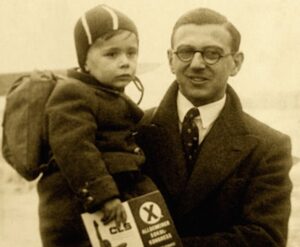
The young Nicholas was educated at Stowe, a boarding school in Buckinghamshire, and left aged 17 to pursue a career in banking. He was posted to various European cities in his early career and became fluent in German and French. Back in London in the mid-1930s, he was a member of the Labour Party, which opposed the then Conservative government’s policy of appeasement towards the dictatorships of Hitler in Germany and Mussolini and Italy – in other words, seeking to contain their aggression through concessions in an attempt to avoid a war for which the Government did not consider Britain ready.
In late 1938, Winton abandoned plans for a skiing holiday in Switzerland and travelled instead to Prague, the capital of what was then Czechoslovakia, to help friends of his who were volunteering to support Jewish refugees. Nazi Germany had occupied part of Czechoslovakia and had its sights set on invading the rest of the country. The Nazis’ antisemitic laws and policies were put into effect in the occupied part of Czechoslovakia, and Jewish people were driven from their homes towards an uncertain fate.
Although still unwilling to fight a war in Europe, the British Government passed a measure through the House of Commons to allow unaccompanied refugee children and young people up to the age of 17 to enter Britain – as long as they had a place to stay and a financial guarantee provided of £50, which was the equivalent of £4000 today. So, not easy. Winton and his colleagues set about identifying Jewish children – whom they knew to be at grave risk from the Nazis in the long term – who could potentially be taken to London by train. This idea became known as Kindertransport – German for ‘transport of children’.
Winton returned to London in late January 1939, not long before Nazi Germany took over the whole of Czechoslovakia. He left his fellow volunteers in charge of arrangements at the Prague end, while he worked tirelessly – alongside a full-time job – to find hosts and financial backers in Britain so as to fulfil those requirements of a promised place to stay and a monetary guarantee. Over the spring and summer of 1939, eight trains were permitted to leave Prague by the German authorities, taking large groups of children – sometimes looked after by just one adult – on a route out of Czechoslovakia and through Germany and the Netherlands. The children crossed the North Sea by ferry from the Hook of Holland to Harwich and then boarded another train which took them into Liverpool Street Station – a London terminus which you can get to very easily by Central Line from Woodford, and today you can find two memorial statues to the Kindertransport right there. The Liverpool Street statues aren’t of Winton, but there is one of him in Prague’s Central Station.
In 1939 there were other Kindertransport routes from other European cities, as well as some small flights, and thousands of children were brought to safety as a result. Nicholas Winton is personally credited with arranging the rescue of 669 children over those eight train journeys. The vast majority of them never saw their parents or wider family again, as their relatives would go on to be murdered in the Holocaust. There was a ninth train due to leave Prague on 1 September 1939, the day war broke out, and it was not permitted to leave. Of the 250 children on board, only two survived the war.
A BBC report in 2015 revealed that over 370 of the 669 children saved by Winton were never traced in later life. The report suggested that many of them may not have known the full story of where they originally came from or how they survived the war. Around half of the children were identifiable in later life as having been on Winton’s trains – and, of course, many of them went on to have children, grandchildren and great-grandchildren, who all owe their existence to what he achieved.
That a good number of those original children could be identified gave rise to a remarkable piece of television that was made in 1988 when Nicholas Winton was in his very late 70s. It was over two episodes of a long-running and extremely popular BBC programme called ‘That’s Life’, which covered consumer affairs, observations on everyday life and serious investigative journalism, all presented in front of a studio audience.
The first episode in question involves the presenter Esther Rantzen explaining to the audience and viewers about Nicholas Winton’s rescue work, with the aid of his scrapbook from the time. After the war, Winton had not discussed his activities – either with his family or more widely – but his daughter had unearthed his scrapbook in the loft nearly 50 years after the fact. The ‘That’s Life’ team then picked up the story. I shall let the footage speak for itself.
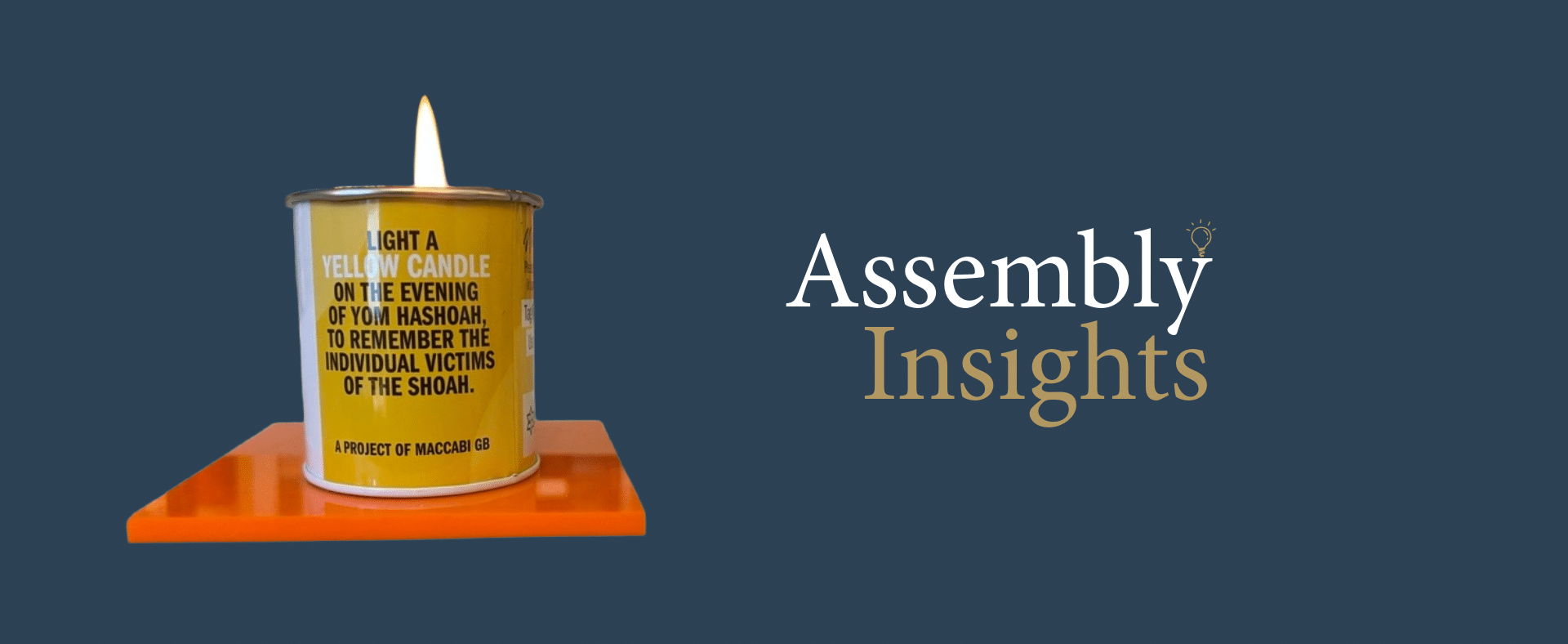
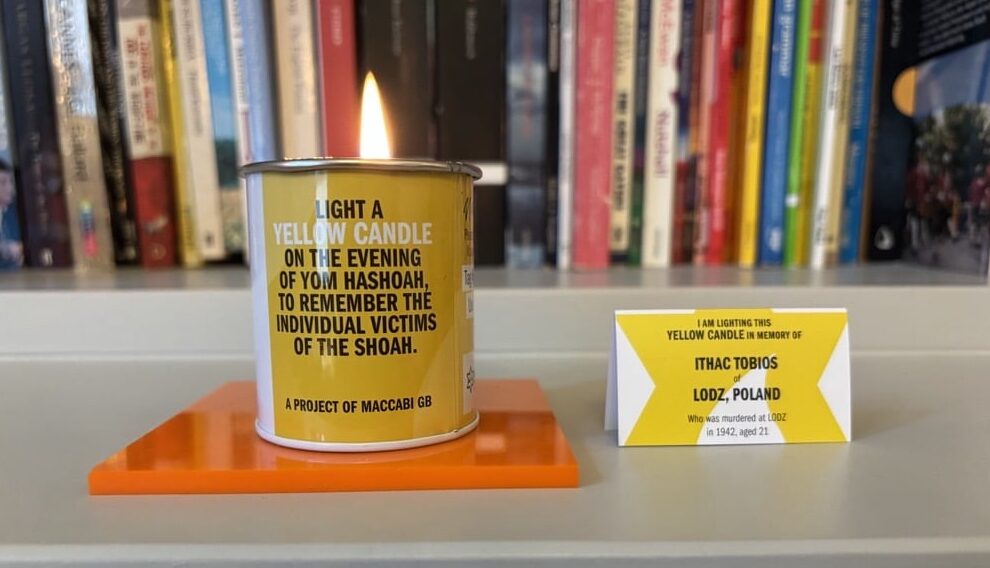
There is a tradition in the Jewish community, in memory of those who died in the Holocaust, to light a candle at particular times of year. Each candle, although it carries the symbolism of general remembrance for all victims of the Holocaust, is actually linked to an identifiable and named victim. And that is a very important facet of the tradition of lighting a candle, because it is an opportunity to acknowledge the Holocaust at a personal scale by honouring one individual victim at a time, whether they were killed in a concentration camp, in the Jewish quarter of an occupied city, in Eastern or Central Europe, in Germany, Italy or France, or elsewhere.
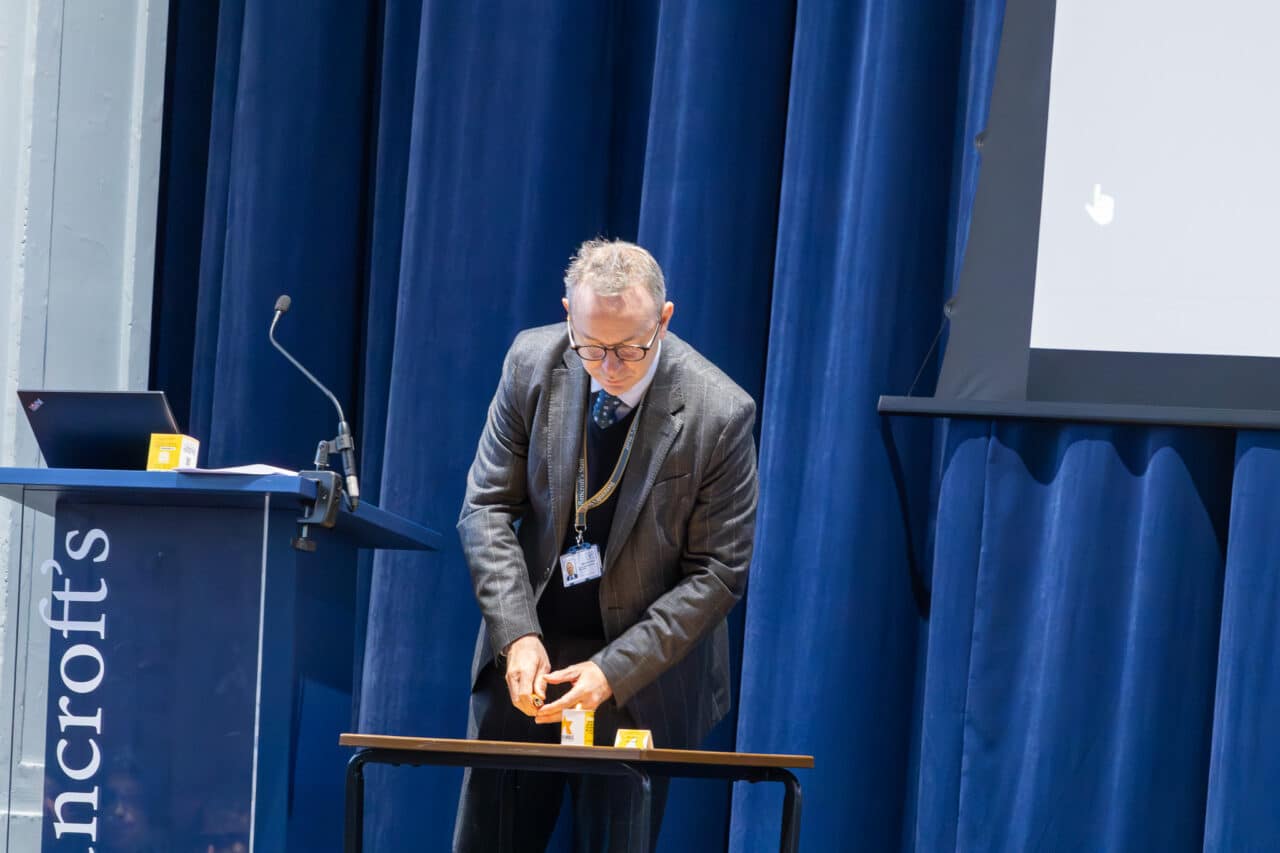
I will light our candle today in memory of Ithac Tobios, a Polish Jew who was murdered aged 21 in 1942 in his home city of Łódź.
Thank you all for your attention.